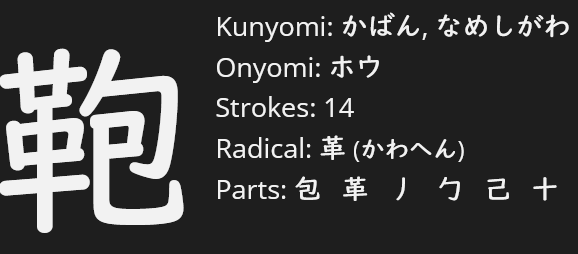
Today when reviewing the kanji 鞄 I saw some inconsistencies;
the
quizz (and indeed the kanji entry) listed なめしがわ as a kun reading; but
to my knowledge that kanji only has かばん as kun reading.
Also, なめしがわ is the radical 韋, which doesn't appear in 鞄 (which has かわへん, 革).
So, it seems an error on the 鞄 entry.
Also, the list of kanji when searching for なめしがわ is :
韓靼鞣韋韜韌韍韎韐韑韔韗韘韙韝韞韠韛韡韤
It includes 靼 and 鞣 that are actually かわへん, that is because they have it as a reading; however 鞄, despite having (wrongly, I think) the reading, doesn't appear in the list; but while it has the reading in the details :
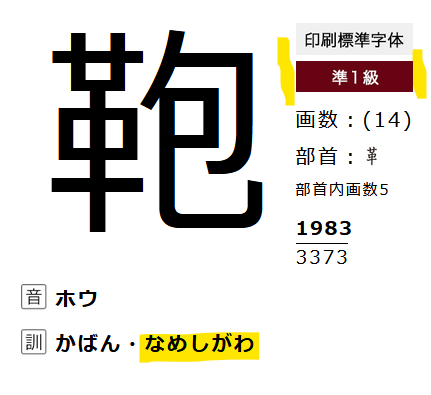
Mmh, indeed Kanjipedia (the offical site for the kanken test) list it : 鞄, listed as a 準1級 kanji:
Indeed the kanji has that meaning originally; kotobank says : 中国では、「鞄」の字はなめし皮、また、それを作る職人のこと。
So, a "kanji meaning" rather than a "reading" (but, historically, the word 訓読み mean "kanji meaning" I think) ; or maybe a "kanbun reading" ?
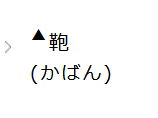
It doesn't seem to be a real "reading" on modern Japanese however, my IMEs don't have it, kotobank says it is the meaning "in China", and Japanese wiktionary doesn't have it as reading either : 鞄
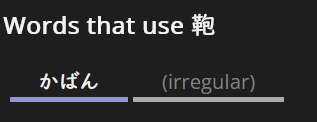
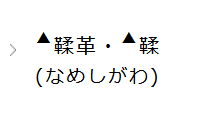
And Kanjipedia, despite listing it as a kun reading, doesn't show a word using that kanji and that reading; here are the results of words "containing" the kanji, and the reading:
So, is it useful to "teach" it as a kanji reading in renshuu ?


 So, is it useful to "teach" it as a kanji reading in renshuu ?
